New Delhi, Aug 18: India’s total area under kharif crops has crossed 1,016 lakh hectares so far this season, showing that farmers have continued planting across the country despite uneven rainfall in some regions.
The total area sown stood at 1,016.57 lakh hectares as of August 14, compared with 1,037.52 lakh hectares during the same period last year. The current acreage is therefore around 21 lakh hectares lower than last year.
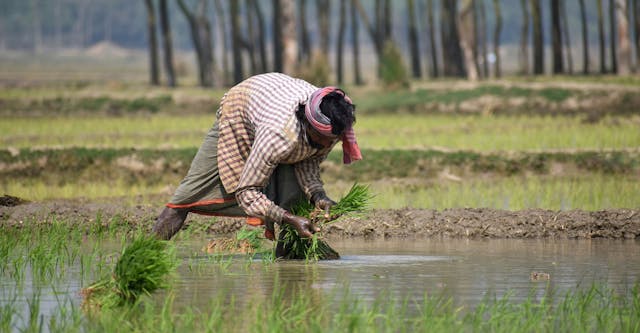
Rice continues to account for the largest share of kharif acreage, with around 379.07 lakh hectares planted so far. This is lower than the 393.44 lakh hectares recorded during the corresponding period last year.
The area under pulses has remained broadly stable at 108.14 lakh hectares, compared with 108.49 lakh hectares a year earlier. Coarse cereals such as jowar, bajra and ragi account for around 172.96 lakh hectares, slightly below last year’s 177.13 lakh hectares.
Cotton sowing has reached about 107.30 lakh hectares, compared with 108.26 lakh hectares last year, while sugarcane coverage stands at around 58.31 lakh hectares, almost unchanged from the 58.62 lakh hectares recorded a year earlier.
The overall numbers present a mixed picture for the agricultural sector. Farmers have maintained a substantial pace of sowing, but total acreage remains below last year’s level, reflecting the impact of weather conditions in some parts of the country.
Rainfall in the coming weeks will be particularly important for the crops already in the ground. Adequate and well-distributed rainfall can support crop growth and improve yields, while prolonged dry spells could put rain-dependent farms under pressure.
The progress of the kharif season is important not only for farmers but also for consumers and the wider economy. Kharif crops such as rice, pulses, cotton, oilseeds and coarse cereals influence food availability, agricultural incomes and rural demand.
A healthy harvest could help keep food supplies stable and support farm incomes, while any significant weather-related damage could put pressure on crop prices and household food budgets.
For farmers, the next few weeks will therefore be crucial. Much will depend on how rainfall develops across major agricultural regions and whether standing crops receive enough moisture during key stages of growth.
The government and markets will continue to watch sowing and rainfall trends closely as the kharif season progresses.
With more than 1,016 lakh hectares already under cultivation, the scale of this year’s kharif sowing remains substantial, but the final outcome will depend heavily on rainfall and crop conditions in the weeks ahead.