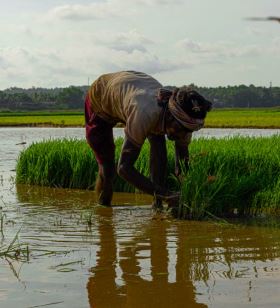
India’s agricultural economy supports millions of households and remains essential to the country’s food security, rural employment and economic stability. Yet, for many farmers, growing crops has become a financial balancing act. Rising input costs, uncertain weather, fluctuating market prices and limited access to affordable loans continue to put pressure on farm incomes.
Although India has built an extensive rural banking network and introduced several agricultural credit schemes, access to timely and affordable finance remains uneven. Small and marginal farmers, tenant cultivators and households without clear land ownership documents often find it difficult to secure loans from formal financial institutions. When money is needed urgently for seeds, fertilisers, irrigation or labour, delays in obtaining bank credit can force farmers to approach private moneylenders.
The consequences extend beyond individual farming households. Persistent rural debt can reduce spending in village economies, discourage investment in agricultural improvements and make it harder for farmers to recover from crop losses. Improving rural credit access is therefore not only an agricultural priority but also an important part of India’s broader economic development.
The Credit Gap Behind India’s Agricultural Economy
Agricultural lending has expanded through commercial banks, regional rural banks, cooperative institutions and government-supported programmes. The Kisan Credit Card (KCC) scheme, in particular, is intended to help farmers meet their short-term cultivation and related financial requirements.
However, the availability of agricultural credit at the national level does not mean that every farmer can access it when needed. Lending procedures frequently depend on land records, documentation, repayment capacity and other eligibility requirements. These conditions can disadvantage farmers who cultivate leased land, sharecroppers and agricultural workers who do not own sufficient assets.
For small farmers, even a modest loan can determine whether they purchase quality seeds, maintain irrigation facilities or hire labour at the right time. Agricultural activities follow seasonal cycles, leaving little room for delays. A loan approved after the sowing period may have limited value because the opportunity to invest has already passed.
Banks also face genuine challenges when lending to agriculture. Crop incomes fluctuate, weather conditions are unpredictable and recovery can become difficult after a failed harvest. The challenge for financial institutions is to manage these risks without excluding the farmers who need credit most.
Rising Farming Costs Are Squeezing Household Budgets
The financial pressure on farmers begins well before the harvest. Seeds, fertilisers, pesticides, diesel, electricity, machinery rentals and labour all contribute to cultivation expenses. Higher costs can reduce the amount farmers retain from each season, particularly when selling prices do not rise at the same pace.
Small and marginal farmers are especially vulnerable because they often have limited bargaining power when purchasing inputs or selling their produce. Those without adequate storage facilities may also need to sell immediately after harvesting, when local supply is high and prices may be under pressure.
The problem becomes more difficult when farmers must borrow to finance each production cycle. A substantial portion of the next harvest’s earnings may go towards repaying previous loans, leaving little money for household needs or the next season’s investment.
This can create a cycle in which farmers continue cultivating their land but struggle to build financial reserves. Without affordable credit and better income protection, even a reasonably productive harvest may not be enough to restore household finances.
Climate Uncertainty Makes Borrowing More Risky
Agriculture remains highly exposed to weather conditions. Delayed monsoons, irregular rainfall, floods, droughts, heatwaves and pest attacks can reduce yields and damage the income farmers expect from a season.
Unlike many other businesses, farmers often commit substantial funds before knowing how much they will earn. Seeds, fertilisers and labour must be paid for in advance, while revenue arrives only after the crop is harvested and sold.
When a crop fails, the farmer may lose both the expected income and the money already invested in production. Loan repayments, however, do not automatically disappear with the harvest.
Crop insurance, irrigation infrastructure, water conservation and climate-resilient farming practices can help reduce these risks. However, support must be accessible, and insurance claims need to be settled efficiently if they are to provide meaningful relief during a financial crisis.
Flexible repayment arrangements linked to agricultural cycles can also help prevent temporary crop losses from turning into long-term debt problems.
Why Informal Lending Remains Attractive
When bank loans are difficult to obtain, informal lenders often become the quickest source of money. Local moneylenders, traders and landlords may provide funds with minimal paperwork and faster decisions than formal institutions.
For farmers facing an urgent need to buy seeds or pay workers, this immediate access can be valuable. The difficulty lies in the cost and terms of borrowing. Informal loans may carry substantially higher interest rates, and unclear repayment conditions can make the total liability difficult to manage.
A farmer who borrows at a high rate to finance cultivation may struggle to repay the principal and interest after a weak harvest. Additional borrowing may then be required to meet household expenses or prepare for the next season.
Over time, a large share of farm income can be absorbed by debt repayments rather than productive investment. In severe cases, families may be forced to sell assets or reduce essential spending.
Expanding access to formal credit must therefore involve more than opening bank accounts. Farmers need loan products that are timely, affordable and suited to the realities of agricultural income.
Government Schemes Need Stronger Last-Mile Delivery
Government-supported agricultural lending programmes aim to reduce borrowing costs and help farmers access working capital. The Kisan Credit Card scheme and interest-support mechanisms are important components of this effort.
However, the effectiveness of these programmes depends on implementation. Farmers need clear information about eligibility, straightforward application procedures and assistance with documentation. Banking services must also reach tenant cultivators and other agricultural workers who may not possess conventional land ownership records.
Financial institutions and local administrations can improve access by coordinating with agricultural departments, farmer producer organisations and cooperative networks. Regular village-level credit camps and assistance with applications could help eligible farmers understand available options.
Loan waivers may provide immediate relief to some indebted households, but they are not a substitute for a reliable agricultural credit system. Their coverage can be uneven, and farmers who do not meet eligibility conditions may receive little benefit. Repeated reliance on waivers also does not address the underlying causes of excessive borrowing, including weak farm incomes, crop losses and limited access to affordable finance.
Long-term policy should focus on preventing distress before it develops rather than relying primarily on relief after debt becomes unmanageable.
Digital Finance Can Help, but It Cannot Solve Everything
Technology offers opportunities to improve agricultural lending. Digital land records, electronic transactions, crop information and verified purchase receipts can help financial institutions assess applications more efficiently.
Satellite imagery and other agricultural data may also help lenders understand crop conditions and estimate production risks. With suitable safeguards, these tools could support credit assessments for farmers whose financial circumstances are not fully reflected in traditional documentation.
Digital platforms can reduce paperwork and improve communication between banks and borrowers. They may also make it easier to track loan applications and inform farmers about repayment schedules.
However, technology should not become another barrier. Farmers with limited internet access, low digital literacy or incomplete records may struggle to use online systems. Data errors can also result in unfair lending decisions if applicants have no effective way to correct them.
Digital lending must therefore be supported by local assistance, transparent assessment criteria, data privacy protections and accessible grievance mechanisms. Technology should make credit decisions fairer and faster, not simply automate existing exclusions.
Better Farm Incomes Are Essential for Sustainable Credit
Affordable loans are important, but borrowing alone cannot solve the financial pressures facing Indian agriculture. Farmers also need more predictable earnings and greater control over production costs.
Investment in irrigation, storage, rural roads and local processing can reduce losses and improve market access. Farmer producer organisations can help small cultivators purchase inputs collectively, negotiate better prices and connect with larger buyers.
Access to reliable market information can also help farmers make better decisions about when and where to sell their produce. Diversification into suitable crops, livestock and other rural enterprises may provide additional income opportunities, depending on local conditions and available resources.
Insurance and effective disaster support remain essential because agricultural income will always carry some degree of uncertainty. A stronger safety net can protect farmers from having to borrow excessively after a climate-related shock.
For lenders, a more stable farm economy also improves the prospects of repayment. For farmers, it means a greater chance of using credit to increase productivity rather than simply covering earlier losses.
Building a Rural Credit System That Works for Farmers
India’s rural credit challenge reflects a wider gap between the availability of financial services and the ability of vulnerable households to benefit from them. Small farmers need loans that arrive before critical agricultural operations, repayment schedules that reflect seasonal earnings and support that remains accessible after unexpected losses.
Banks, cooperatives, government agencies and agricultural organisations must work together to strengthen last-mile lending and improve financial awareness. Lending systems should recognise legitimate cultivation arrangements beyond conventional land ownership, while maintaining responsible checks on repayment capacity and credit risk.
The broader objective must be to make agricultural borrowing a tool for productive growth rather than a recurring source of financial stress. When farmers can access suitable loans, manage climate risks and earn more predictable returns, they are better positioned to invest in their land, support their families and contribute to the rural economy.
A resilient agricultural economy depends not only on how much credit is available, but also on whether farmers can obtain it at the right time, at a manageable cost and under conditions that allow them to repay without sacrificing their financial security.