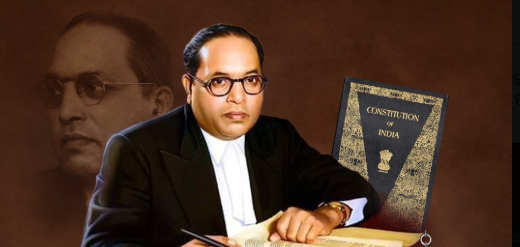
Apr 14 (BNP): Every year on April 14, India observes Ambedkar Jayanti, marking the birth of Dr. B. R. Ambedkar—a figure whose influence goes far beyond history books and constitutional pages.
It is a day when India pauses to remember not just a leader, but an idea: that dignity is not granted by society—it is an inherent right of every human being.
From Exclusion to Enlightenment
Born in 1891 in Mhow, Dr. Ambedkar’s early life was shaped by the harsh realities of caste discrimination. Yet, rather than accepting limitation, he turned education into a lifelong instrument of resistance.
His academic journey took him from India to some of the world’s most respected universities, shaping a mind that would later challenge both social injustice and institutional inequality with equal force.
The Making of India’s Constitutional Foundation
As Chairman of the Drafting Committee of the Constituent Assembly, Dr. Ambedkar became one of the principal architects of the Constitution of India.
He did not treat the Constitution as a legal document alone, but as a moral contract between citizens and the state. His vision ensured that India’s democracy would rest on four pillars—justice, liberty, equality, and fraternity.
A Revolutionary Who Worked Through Law
Unlike many reformers who worked outside systems, Ambedkar worked from within them—using law as a tool for transformation.
As India’s first Minister of Law and Justice, he pushed for reforms that strengthened constitutional rights and expanded protections for historically marginalized communities. His belief was simple yet powerful: political independence has little meaning without social equality.
A Voice That Refused to Fade
Ambedkar’s writings remain among the most powerful critiques of caste and social hierarchy in modern India. He challenged not only discrimination, but also the silence that allowed it to persist.
His call to action—“Educate, Agitate, Organize”—continues to echo as a framework for empowerment, urging people to think critically, act collectively, and demand justice.
Recognition That Came Later, but Lasts Forever
In 1990, Dr. Ambedkar was posthumously awarded the Bharat Ratna, India’s highest civilian honour.
The recognition formally acknowledged what millions already believed—that his contribution to the nation was foundational, not symbolic. It was a moment that placed his legacy firmly within the country’s highest national memory.
Ambedkar Jayanti: A Living Tradition
Today, Ambedkar Jayanti is observed across India with deep respect and participation from all sections of society. Public gatherings, discussions, and tributes take place nationwide, with major commemorations at Chaitya Bhoomi in Mumbai.
The day is often called “Equality Day,” reflecting the continuing relevance of his mission in contemporary India.
In 2026, marking his 135th birth anniversary, the occasion carries added significance as the nation reflects on both progress achieved and challenges that remain.
Why Ambedkar Still Feels Contemporary
Ambedkar’s ideas are not frozen in time. They continue to shape conversations around rights, representation, and justice in modern India.
His insistence on constitutional morality remains especially relevant in a rapidly changing society where institutions are constantly tested by new social and political realities.
A Legacy That Lives Beyond Time
Dr. B. R. Ambedkar’s legacy lives not only in statues and commemorations, but in everyday freedoms often taken for granted—the right to vote, to be heard, and to live with dignity.
Ambedkar Jayanti is ultimately not just remembrance—it is renewal. A reminder that the idea of India is strongest when it belongs equally to everyone.
