Mumbai, Jan 20: Mumbai Climate Week (MCW) today underscored the critical importance of community-led and gender-responsive climate action with the launch of a pioneering district-level climate planning initiative in Raigad, Maharashtra. The three-year pilot project aims to embed gender justice, indigenous knowledge, and grassroots leadership into climate governance, setting a replicable model for districts across the state and beyond.
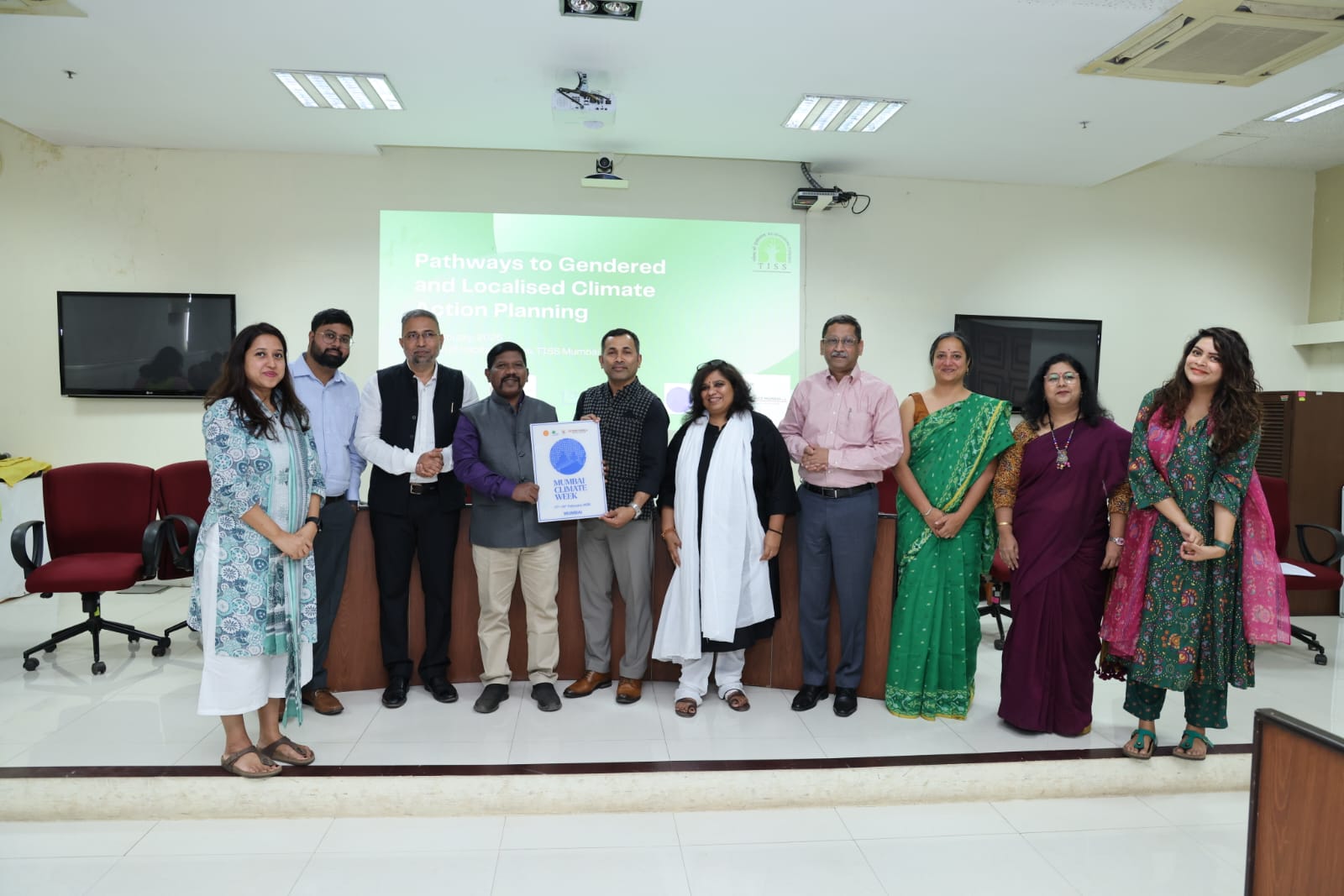
The initiative was formally launched during the two-day national seminar, “Pathways to Gender-Responsive Local Climate Action and Justice: Localizing SDGs, Decolonizing Governance, Indigenizing Knowledge,” held as part of the 90th-year Navati celebrations of the Tata Institute of Social Sciences (TISS). The seminar also served as a curtain-raiser to Mumbai Climate Week 2026, scheduled from February 17–19, 2026.
The project is being led by TISS in partnership with the Maharashtra State Climate Action Cell (SCAC), Asar Social Impact Advisors, Waatavaran Foundation, and the Policy & Development Advisory Group, with support from the University of Toronto India Foundation. Together, the partners highlighted the urgent need to localise climate action by centring communities most affected by climate change.
The Raigad Climate Action Planning initiative was inaugurated by Shri Abhijit Ghorpade, Director, State Climate Action Cell, and aims to strengthen district-, village-, and Panchayat-level climate planning processes in alignment with Maharashtra’s SAPCC 2.0.
Speaking at the inauguration, Shri Shishir Joshi, Founder, Mumbai Climate Week, said:
“Climate action in India cannot succeed if it remains confined to policy rooms and global summits. Real solutions will emerge from districts, villages, and communities—especially from women and indigenous groups who experience climate impacts first-hand. The Raigad initiative reflects the spirit of Mumbai Climate Week: localising climate action, democratising decision-making, and building models that are just, inclusive, and scalable.”
Echoing this emphasis on inclusion, Prof. M. Mariappan, Officiating Vice Chancellor, TISS, said:
“Women play a critical role in building resilience and shaping adaptation efforts, often drawing on deep community knowledge and care practices. Climate action planning must therefore centre community voices while also addressing structural inequalities. TISS remains deeply committed to just and inclusive approaches to such planning.”
Mumbai Climate Week 2026 will continue to amplify such locally rooted climate solutions, creating a platform where policymakers, practitioners, researchers, and communities can collectively shape the next phase of India’s climate journey.
Climate change is not only an environmental challenge but also a social and economic one, disproportionately affecting women, tribal populations, and marginalised communities. By prioritising participatory planning, this initiative moves beyond top-down climate frameworks and reimagines governance through lived experiences and indigenous knowledge systems.
The seminar highlighted the need to integrate climate justice into development planning, ensuring that climate action plans are not only technically sound but also socially equitable.
Key Highlights of the Seminar:
- Launch of the Raigad Climate Action Planning Project: Training Village Development Committees and integrating SDGs into Panchayat Development Plans.
- Conference of Panchayats – COP of the Global South: A counter-narrative to global COPs, featuring Gram Sevaks and local leaders discussing decentralised climate governance.
- Documentary Screening: “Climate Resilience: Life as Told by Women” (58 mins), showcasing women-led climate adaptation practices in Kerala’s coastal regions.
Leave a Reply